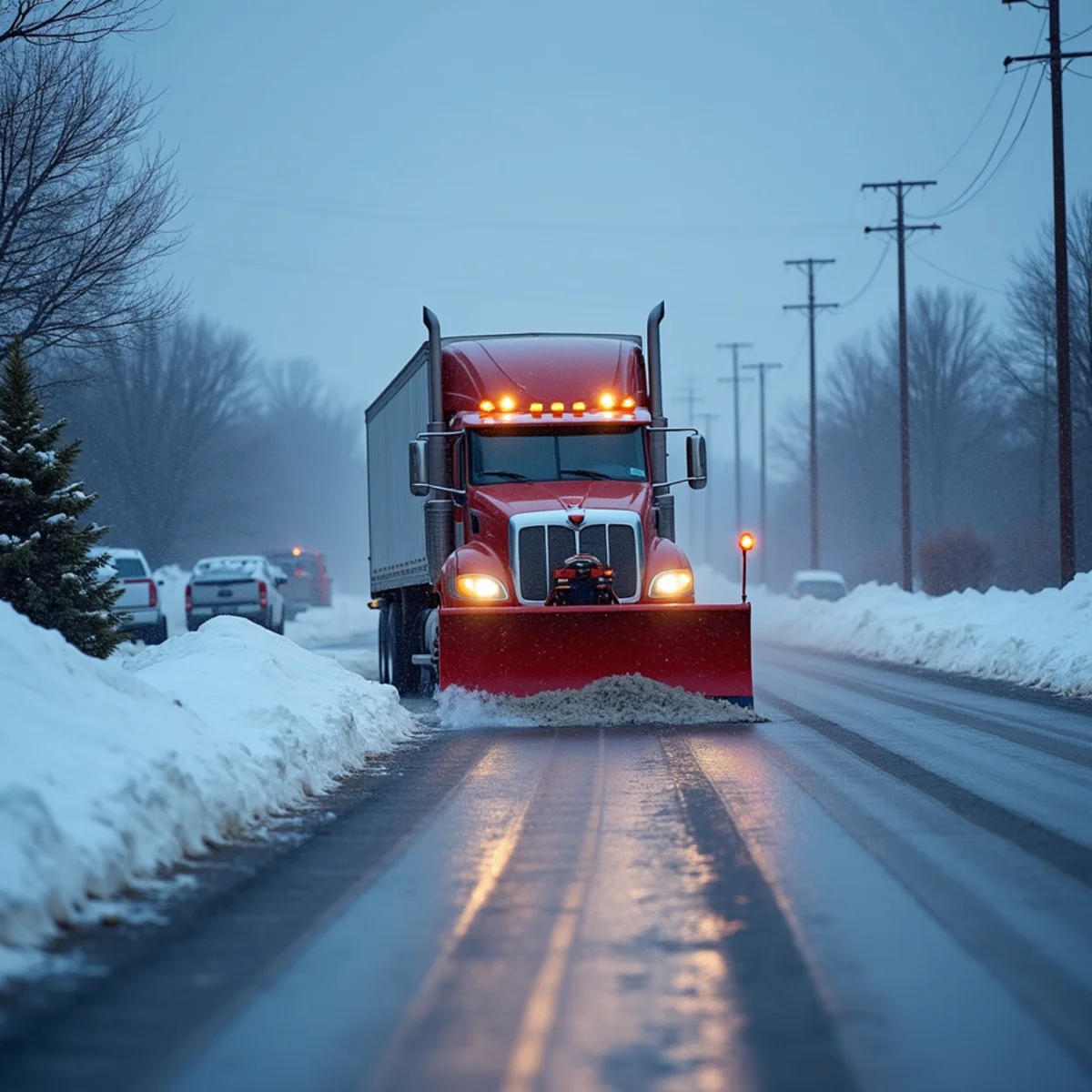
For a commercial property in the Georgetown and I-75 corridor, snow and ice are not just an inconvenience — they are an operations and liability problem. A distribution center that cannot receive trucks, a plant whose shift cannot get in, or a retail lot where a customer slips all carry real costs. Professional snow management exists to keep those risks off your plate.
Here is how a well-run commercial snow program actually works.
It starts before the first flake
The plan is built in the fall, not during the storm. We map the property, identify priority zones — entrances, loading docks, fire lanes, main drive aisles — and set the trigger depth at which plowing begins. For high-liability sites we also plan pre-treatment so snow and ice do not bond to the pavement in the first place.
Documenting all of this in advance is what makes the response automatic when a storm hits at 3 a.m.
Trigger depths and priority zones
Not every property gets plowed at the same depth. A zero-tolerance site like a medical or retail facility may start clearing at the first accumulation, while an industrial yard might trigger at a couple of inches. Priority zones are cleared first so critical access stays open even while a large lot is still being worked.
The refreeze is the real danger
Central Kentucky’s freeze-thaw pattern is what makes our winters treacherous. Daytime melt refreezes into black ice overnight, and that is often when the worst slip-and-fall incidents happen. Plowing removes the snow, but salting and monitoring through the refreeze are what keep surfaces genuinely safe.
A serious commercial program includes post-storm salting and follow-up checks, not just a single plow pass.
Documentation protects you
- Service logs recording when each event was plowed and treated.
- Defined scope so expectations are clear and disputes are rare.
- Consistent crews that know your property and its problem areas.
- A single point of contact you can reach during an event.
Field notes: what separates a real snow program from a guy with a plow
The difference shows up at 3 a.m. A serious commercial program has already pre-treated your lot, mapped the priority zones, and set the trigger depth in writing — so the crew knows exactly what to do before the first flake, not after your tenants start calling. The casual operator shows up when they can, plows the open areas, and leaves the refreeze to chance.
For logistics hubs and plants around the I-75 corridor, the cost of getting this wrong is measured in closed docks and shift delays, not just inconvenience. That is why zero-tolerance sites get continuous service through the event and monitoring through the overnight refreeze, and why the paperwork — time-stamped service logs — matters as much as the plow itself if a slip-and-fall claim ever lands.
The Bottom Line
Commercial snow management is a plan, not a phone call during the storm. Set trigger depths, priority zones, pre-treatment, and documentation before winter, and your property stays open and defensible. Hernandez Landscaping runs seasonal and per-event snow contracts across Georgetown and the I-75 corridor.
How Hernandez Landscaping Can Help
We put this into practice every day across Central Kentucky. Explore our emergency snow plowing and salting and commercial grounds maintenance, or see how we serve businesses in Georgetown and the Shelbyville corridor.
Call (323) 606-0255Frequently Asked Questions
A trigger depth is the accumulation at which plowing begins. We set it with you in advance based on your property and risk — often a couple of inches for standard commercial lots, less or zero for high-liability retail and medical sites where pre-treatment starts before the storm.
Yes. For commercial accounts we keep time-stamped records of every pre-treatment, plow, and salting event tied to the weather. If a slip-and-fall claim is ever filed, that documentation is one of your strongest defenses.
Yes. Most commercial clients prefer a seasonal contract with defined trigger depths, priority zones, pre-treatment, and post-storm salting so coverage is automatic and budgeted.
Before winter arrives — ideally in the fall. Getting on the route list early ensures your property is covered from the first event.
Written by the Hernandez Landscaping team
We’re a locally owned, insured landscaping company that has designed, built, and maintained Central Kentucky properties since 2010. This guide reflects hands-on experience with Georgetown’s Zone 6b climate, clay soil, and freeze-thaw winters — not generic advice.
Sources & standards
Our recommendations draw on University of Kentucky turf guidance, EPA WaterSense irrigation principles, and USDA hardiness & soil data.