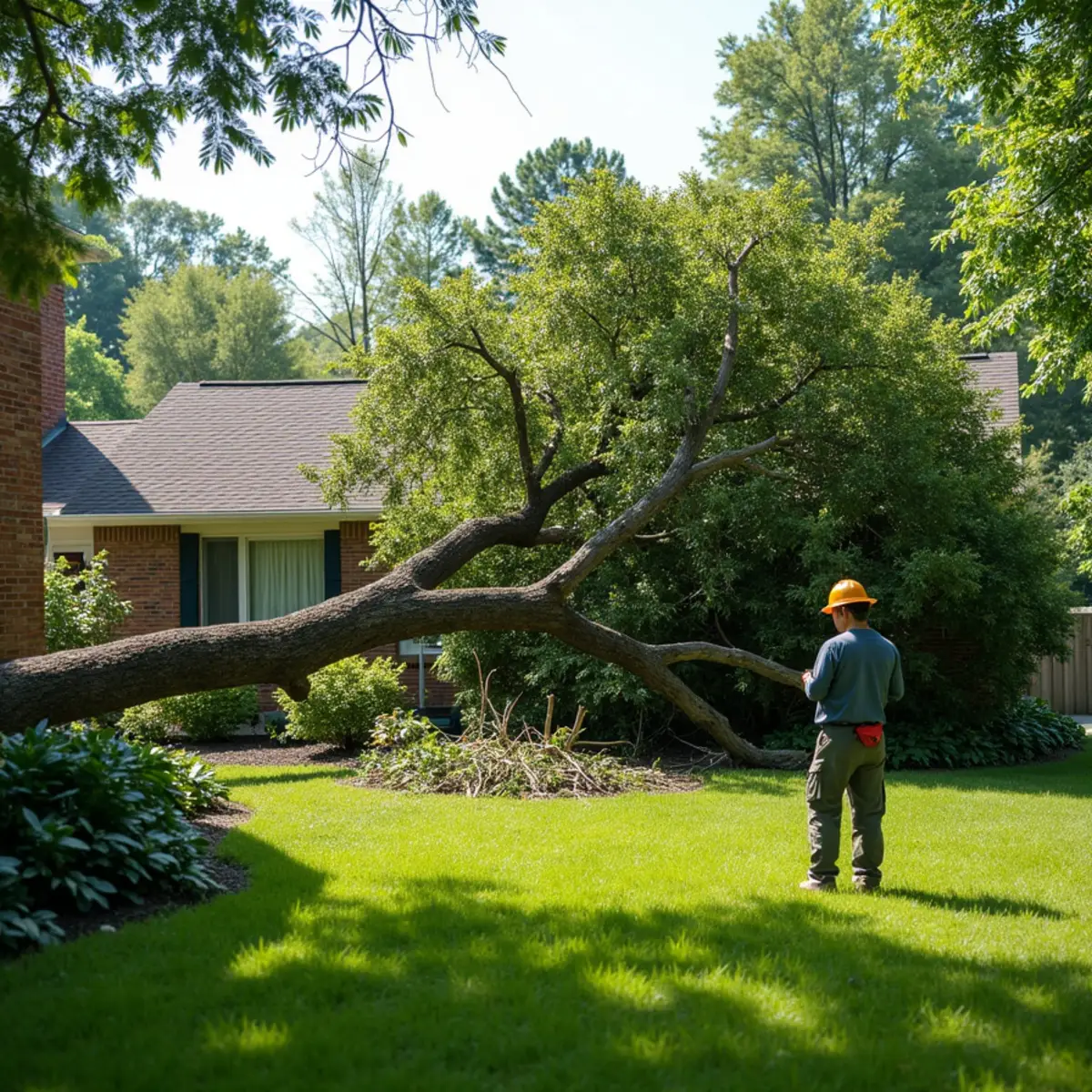
The mature oaks and maples that make Bluegrass properties beautiful are also the ones that shed the biggest limbs when straight-line winds roll through. After a severe windstorm, a yard can be littered with heavy branches, hung-up limbs, and sections of downed fence — and not all of it is as harmless as it looks.
Here is how to think about windstorm cleanup safely.
Spot the hidden hazards first
The most dangerous damage after a windstorm is often the least obvious: a large limb cracked but still hanging in the canopy, a split branch union holding by a strip of bark, or a limb resting on a fence or line under tension. These can drop or spring without warning.
Walk the property from a distance and look up as well as down. Flag anything overhead before you start gathering debris on the ground.
Ground debris vs. tree work
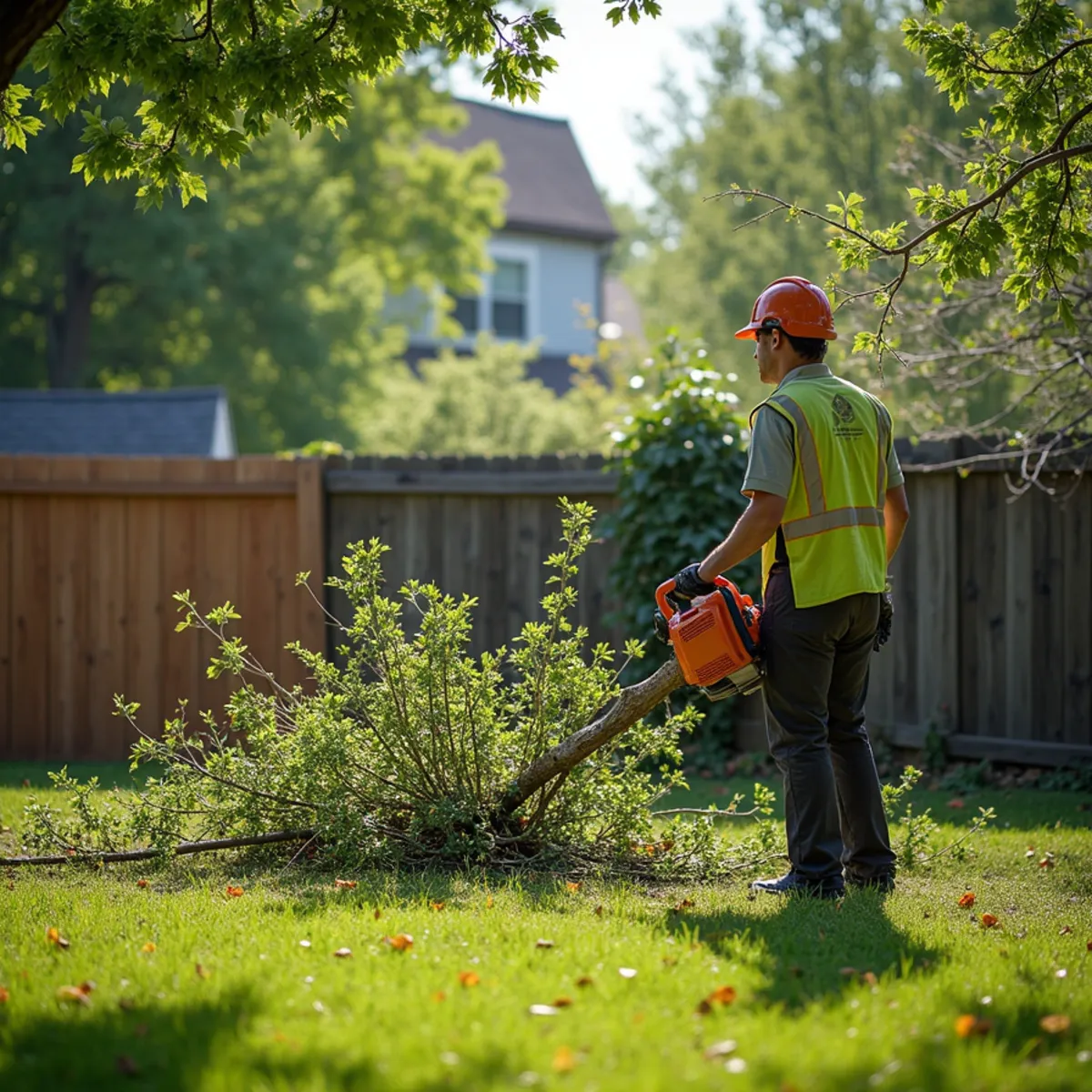
Clearing scattered small branches and brush is manageable for most homeowners, and gathering it early keeps the yard safe and mowable. But limbs that are large, elevated, under tension, or near power lines are a different job entirely. That is where a chainsaw in untrained hands causes serious injuries every storm season.
When a limb is loaded or hung up, the safe approach is controlled cutting and rigging by a crew that can read the tension and release it in the right order.
Damaged fences and structures
Wind-toppled trees frequently take fences with them. Once the tree or limb is safely removed, we can clear the debris and assess the fence line so repairs can follow. Document fence and structure damage with photos for your insurance claim before anything is moved.
Getting the yard back to normal
Full windstorm recovery usually means three passes: remove the overhead hazards, clear and haul the ground debris, and then a final rake-and-blow so the yard is genuinely clean and safe again. We handle all three, and we chip and haul everything off site rather than leaving you a brush pile.
Field notes: the hazards that hide after the wind stops
Straight-line winds do their worst damage to the parts of a tree you cannot see from the ground. A limb can crack at the union and stay wedged in the canopy, held by a strip of bark, ready to fall days later when no one is thinking about the storm. We call these hangers, and they cause a surprising share of post-storm injuries because the immediate danger appears to have passed.
The other quiet hazard is the leaning tree with a lifted root plate. It may look stable, but the soil grip is broken and the next soaked ground plus a moderate gust can put it down. After a severe windstorm, the smartest move is a walk-around that looks up as much as down, flagging anything overhead before you start gathering ground debris.
The Bottom Line
After a Bluegrass windstorm, the branches on the ground are the obvious problem — the ones still hanging in the canopy are the dangerous one. Clear the safe debris, flag the overhead hazards, and let a crew handle anything loaded or elevated. We respond fast across Frankfort, Paris, and the wider region.
How Hernandez Landscaping Can Help
We put this into practice every day across Central Kentucky. Explore our 24/7 emergency storm damage cleanup and urgent yard hazard and debris removal, or see how we serve properties in Frankfort and the Paris area.
Call (323) 606-0255Frequently Asked Questions
Not always, but a tree that leaned after a storm — especially with soil heaving or roots lifting on one side — has lost its anchorage and should be assessed promptly. A tree that has leaned for years is a different situation. The new lean after wind is the one to worry about.
We remove the tree or limb and clear the debris, then assess the fence line so repairs can follow. Document fence and structure damage with photos before anything is moved so your insurance claim reflects the full scope.
Yes. We chip or load and remove all debris from your property and finish with a cleanup pass, rather than piling it for you to deal with.
For straightforward debris and brush we can often schedule same-day or next-day. After a widespread storm we triage by hazard, so call early.
Written by the Hernandez Landscaping team
We’re a locally owned, insured landscaping company that has designed, built, and maintained Central Kentucky properties since 2010. This guide reflects hands-on experience with Georgetown’s Zone 6b climate, clay soil, and freeze-thaw winters — not generic advice.
Sources & standards
Our recommendations draw on University of Kentucky turf guidance, EPA WaterSense irrigation principles, and USDA hardiness & soil data.