If spring is when a Bluegrass lawn wakes up, fall is when it is actually built. Cool-season grasses do their most important root growth in autumn, which makes September and October the highest-leverage window of the whole year in Scott County. The work you do now determines how the lawn looks next spring and summer.
Stay ahead of the leaves
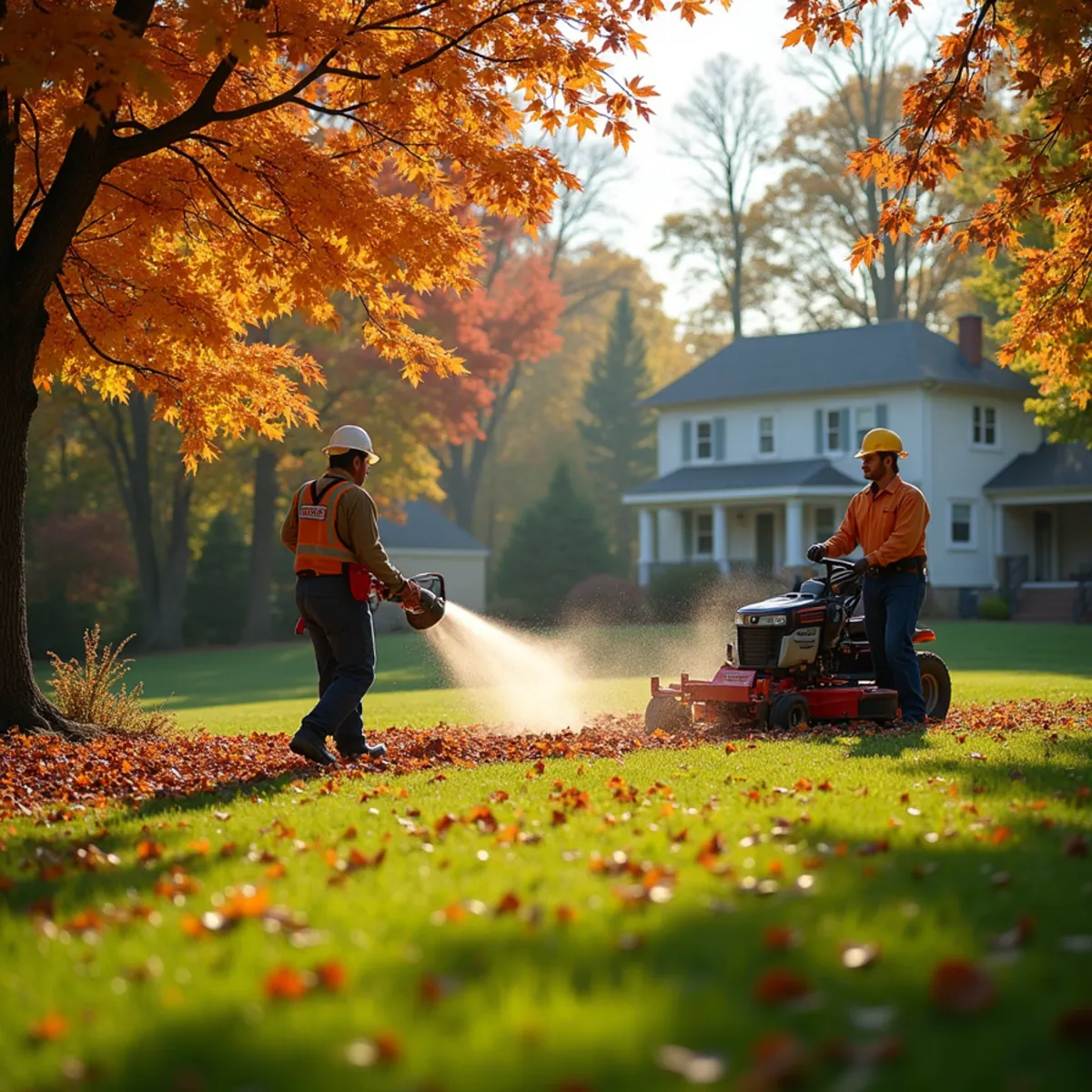
Our mature oaks and maples drop a heavy leaf load, and a thick, matted layer left on the lawn blocks light and traps moisture against the crown — a recipe for snow mold and dead patches by spring. Removing leaves properly, rather than letting them pile up, is the single most important fall task. On big properties, that often means more than one pass as the drop continues.
Aerate and overseed while it counts
Fall is the prime window to aerate compacted clay and overseed thin or worn areas. With warm soil and cooling air, seed germinates well and roots establish before winter, following University of Kentucky guidance that points to late August through October for cool-season renovation. Aerating first and seeding into the holes gives the best seed-to-soil contact.
Dethatch if the thatch is heavy
A thin thatch layer is normal and even helpful, but a thick spongy layer blocks water, air, and nutrients from reaching the soil. If your lawn has built up excessive thatch, fall is a good time to address it so the turf enters winter healthy and breathes freely.
Finish the beds and feed
- Cut back spent perennials and ornamental grasses.
- Refresh mulch to protect roots through winter freeze-thaw.
- Apply a fall lawn feeding to strengthen roots for the cold months.
- Do a final property cleanup so nothing overwinters as a pest or disease harbor.
Field notes: why fall is the season that actually builds your lawn
If we could get Scott County homeowners to invest in one season, it would be fall — not spring. Cool-season grasses do their most important root growth in autumn, which means the aeration, overseeding, and feeding you do now determine how the lawn looks all of next year. Spring gets the attention, but fall does the work, and a lawn built well in October needs far less rescue in July.
The honest caution is leaves. Our mature oaks and maples drop a heavy load, and a thick matted layer left on cool-season turf blocks light and traps moisture — a direct invitation to snow mold and dead patches by spring. A light scattering can be mulched in; a heavy hardwood load has to come off. On big lots that often means more than one pass as the drop continues.
The Bottom Line
Fall is when the Bluegrass lawn is actually built, and when leaves become a real threat if ignored. Aerate, overseed, feed, and keep the leaves cleared, and next year takes care of itself. Hernandez Landscaping runs fall programs across Georgetown and Versailles.
How Hernandez Landscaping Can Help
We put this into practice every day across Central Kentucky. Explore our seasonal fall cleanups and leaf removal and overseeding and turf renewal, or see how we serve lawns across Georgetown and the Versailles area.
Call (323) 606-0255Frequently Asked Questions
Cool-season grass roots most aggressively in fall, so seed sown from late August through October establishes before winter and gets a full head start the next year. Spring seed fights summer heat almost immediately after germinating.
Not every leaf, but a heavy matted layer must come off — it smothers turf and breeds disease over winter. A light scattering can be mulched back in with the mower. The problem is a thick hardwood blanket, which our neighborhoods produce plenty of.
Cool-season grass does its strongest root growth in fall — warm soil and cool air let seed establish before winter and get a head start the next year. Late August through October is the prime window here.
A heavy, matted hardwood leaf layer should be removed — it smothers the lawn and invites disease. A light scattering can be mulched in. Our fall service keeps leaves from building up to damaging levels.
Written by the Hernandez Landscaping team
We’re a locally owned, insured landscaping company that has designed, built, and maintained Central Kentucky properties since 2010. This guide reflects hands-on experience with Georgetown’s Zone 6b climate, clay soil, and freeze-thaw winters — not generic advice.
Sources & standards
Our recommendations draw on University of Kentucky turf guidance, EPA WaterSense irrigation principles, and USDA hardiness & soil data.