The most common question we get about outdoor living projects is also the hardest to answer with a single number: what does it cost? The honest answer is that it depends on size, materials, and — more than anything — site preparation. But you deserve real ranges to plan around, so here they are.
Local price ranges to plan around
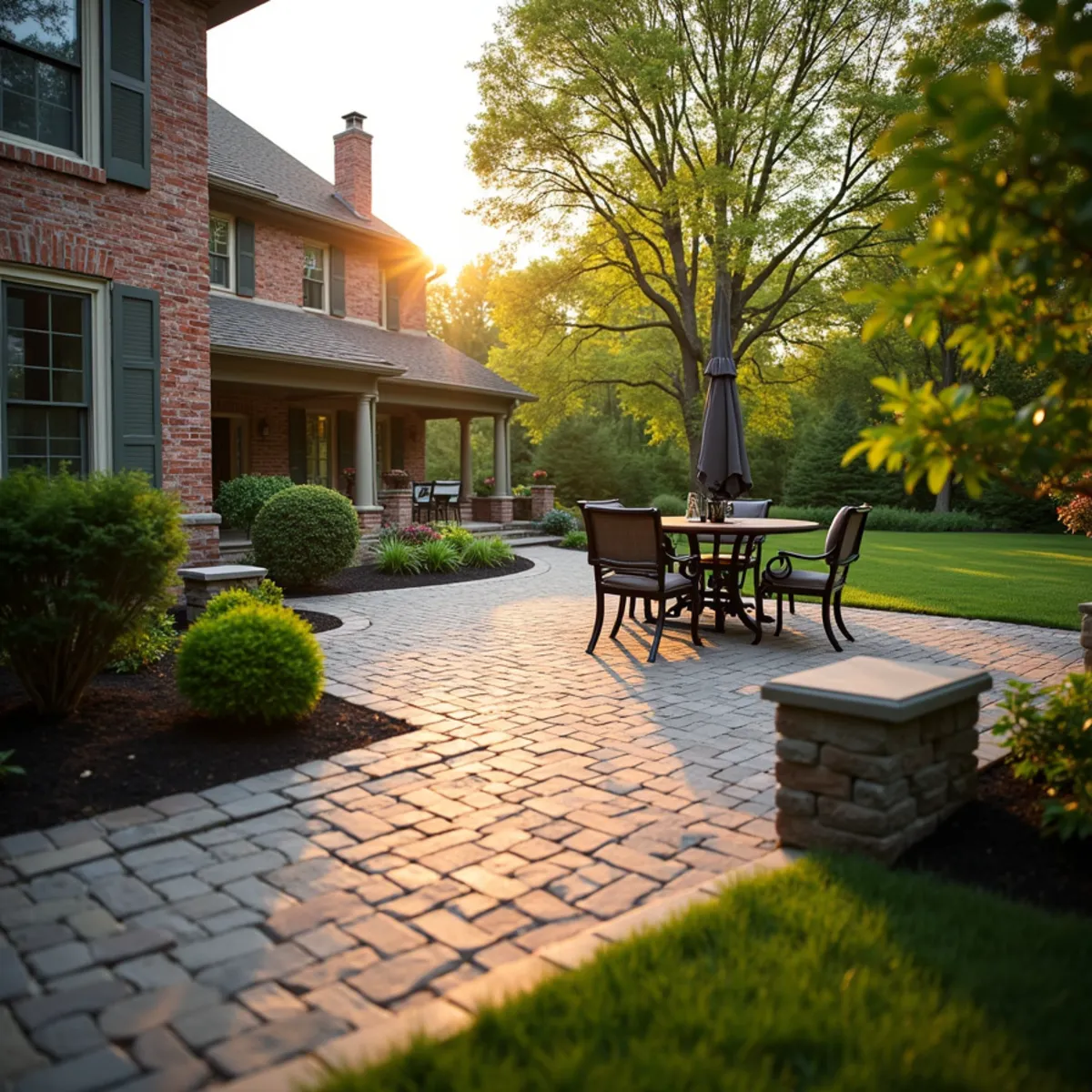
Across Central Kentucky, hardscape projects commonly run in the range of $4,000 to $10,000. As marketplace reference points, a patio averages around $3,572 and a retaining wall around $5,353, though both move substantially with size and complexity. A small flowerbed project might land near $1,470, while a full outdoor-living build with a patio, seat walls, and a fire feature runs well into five figures.
These are planning ranges, not quotes. Every project needs a written, site-specific scope.
What actually drives the price
- Square footage and layout complexity — curves, borders, and patterns take more labor and cutting.
- Material — standard concrete pavers cost less than clay brick or natural flagstone.
- Site prep — excavation depth, hauling, and grade correction in clay soil.
- Height, for walls — taller walls need reinforcement, drainage, and sometimes engineering.
- Add-ons — steps, seat walls, fire pits, and lighting.
- Access — a tight backyard reachable only by wheelbarrow costs more than an open site.
Why the base is where your money goes
It is tempting to compare bids on the visible material, but in our clay soil and freeze-thaw climate, the base is what determines whether a patio or wall lasts decades or fails in a few winters. A proper installation excavates to depth, compacts aggregate in lifts, and — for walls — includes gravel backfill and drain pipe.
A suspiciously low bid almost always cuts the base. That is money saved today and spent again when the surface heaves, sinks, or the wall leans.
How to compare bids fairly
Ask each contractor to spell out excavation depth, base material and thickness, edge restraint, joint sand, and — for walls — drainage and reinforcement. When the invisible work is written down, you can compare bids on the same terms instead of just the sticker price.
Field notes: where the money actually goes
Homeowners are often surprised that the pavers are one of the smaller line items. On a typical Central Kentucky patio, excavation, base aggregate, compaction, and drainage frequently cost more than the surface material — and that is exactly as it should be, because those invisible layers are what keep the patio flat through our freeze-thaw winters. When one bid is far lower than the others, it is almost always the base that got thinned.
The honest way to compare quotes is to make each contractor write down the invisible work: excavation depth, base thickness, edge restraint, joint sand, and drainage. Once those are on paper, you are comparing the same project. Without them, you are comparing a durable patio to one that will heave in a few seasons, at prices that look deceptively close.
The Bottom Line
A patio or wall in Central Kentucky is priced by the ground it sits on as much as the material on top. Judge quotes by the base and drainage, not the sticker, and you will spend once instead of twice. Hernandez Landscaping provides written, itemized scopes for hardscape projects across Georgetown and Versailles.
How Hernandez Landscaping Can Help
We put this into practice every day across Central Kentucky. Explore our brick and stone patio installation and retaining wall and stone construction, or see how we serve homeowners in Georgetown and Versailles horse-country properties.
Call (323) 606-0255Frequently Asked Questions
Almost always the base. A low bid typically reduces excavation depth, skips proper compaction, or omits drainage and edge restraint — the parts you cannot see once the patio is finished, and the parts that determine whether it lasts. Ask each bidder to spell out the base and you will usually find the gap.
Not exactly. Fixed costs like mobilization and access are spread over more square footage, so the per-square-foot price often drops a little as size increases — but added features like walls, steps, or curves and tougher access can push it back up. Size is only one of several drivers.
We can share ranges, but an accurate number requires seeing the site — size, material, access, and prep all move the price. We provide a free written estimate after a visit.
Usually the base. A low bid often thins or skips excavation, compaction, or drainage — the parts that make hardscape last in Kentucky clay.
Written by the Hernandez Landscaping team
We’re a locally owned, insured landscaping company that has designed, built, and maintained Central Kentucky properties since 2010. This guide reflects hands-on experience with Georgetown’s Zone 6b climate, clay soil, and freeze-thaw winters — not generic advice.
Sources & standards
Our recommendations draw on University of Kentucky turf guidance, EPA WaterSense irrigation principles, and USDA hardiness & soil data.