Central Kentucky’s cool-season lawns love spring and fall and struggle through the heat of July and August. That mid-to-late summer window is when a lawn is most vulnerable — to drought stress, and to the fall armyworm outbreaks that can sweep in and strip a healthy-looking lawn in a matter of days. A little vigilance goes a long way.
Understanding summer dormancy
When it gets hot and dry, cool-season grasses like bluegrass and fescue naturally slow down and can go dormant, turning tan to protect themselves. Dormant is not dead — an established lawn usually recovers when cooler, wetter weather returns. The key in summer is to not stress the lawn further: mow high, keep the blades sharp, and avoid heavy traffic on drought-stressed turf.
Smart summer watering
- Water deeply and infrequently to encourage deep roots, rather than daily light sprinkling.
- Water early in the morning to reduce evaporation and disease.
- Aim for the equivalent of about an inch per week, including rainfall, if you are keeping the lawn green.
- Or let an established lawn go dormant and simply keep it alive — both are valid strategies.
Armyworms: the late-summer threat
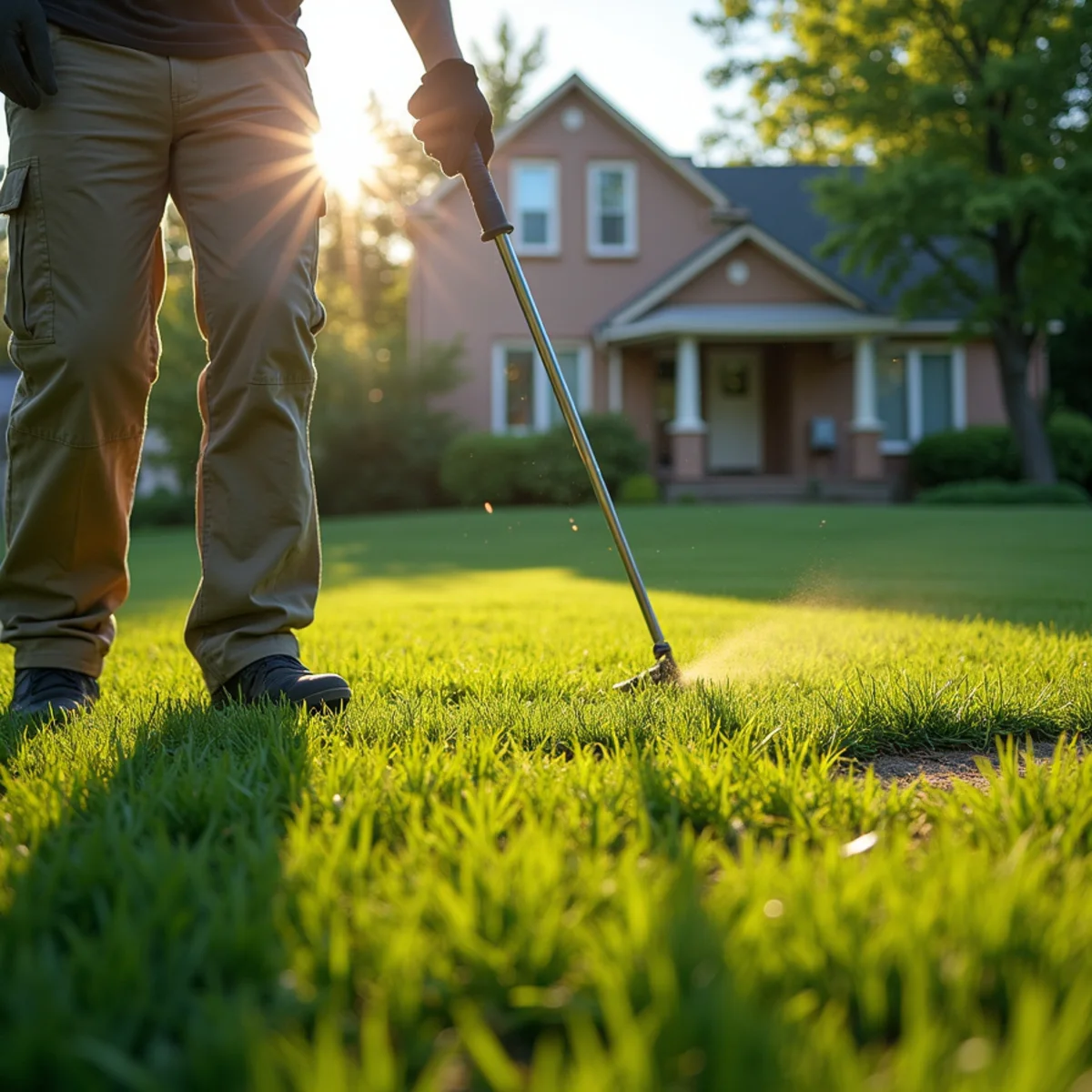
Fall armyworms can appear suddenly in late summer and early fall and cause dramatic, fast damage — a lawn can look chewed down and brown within days of an infestation. Watch for irregular brown patches that seem to spread, and for birds feeding heavily on the lawn, which often signals the worms are present.
Early detection is everything. Caught quickly, an armyworm outbreak can be treated before it destroys the turf; caught late, you may be looking at reseeding or sod.
Set the lawn up to bounce back
The best defense against a hard summer is a healthy lawn going into it and a strong recovery plan coming out. Fall — late August through October — is the prime window to overseed thin areas, aerate compacted clay, and feed the lawn so it rebuilds density before winter. A lawn that recovers well in fall is far more resilient the following summer.
Field notes: catching armyworms before they win
Armyworms are the fastest lawn emergency we deal with. A lawn that looked healthy on Monday can be chewed to brown by the weekend, because the caterpillars feed in numbers and move like a front across the turf. The tell is often the birds — a lawn suddenly crowded with grackles and starlings is frequently a lawn full of caterpillars they are eating. By the time the browning is obvious, the clock is already running.
The honest trade-off with summer lawns is deciding whether to keep a cool-season lawn green through the heat or let it go dormant and simply keep it alive. Both are legitimate. What is not optional is vigilance: a dormant lawn survives a dry August, but neither a green nor a dormant lawn survives an unchecked armyworm outbreak. Scout weekly in late summer and act fast.
The Bottom Line
Late summer is when Bluegrass lawns are most vulnerable — to drought stress and to armyworms that move fast. Scout weekly, decide green-or-dormant deliberately, and plan a strong fall recovery. Hernandez Landscaping keeps lawns healthy year-round across Georgetown and Paris.
How Hernandez Landscaping Can Help
We put this into practice every day across Central Kentucky. Explore our lawn mowing and turf care and sod and turf replacement, or see how we serve lawns in Georgetown and the Paris area.
Call (323) 606-0255Frequently Asked Questions
Very fast — a heavy infestation can chew a healthy-looking lawn down to brown within a few days. Early detection is everything, which is why weekly scouting in late summer and early fall matters so much in Central Kentucky.
Both are valid for an established cool-season lawn. Keeping it green means deep, infrequent watering; letting it go dormant means keeping it barely alive until cooler weather. What you should not do is stress it with heavy traffic or a bad mow while it is struggling in the heat.
Usually not — cool-season grass often goes dormant and tan in heat to protect itself, then recovers in cooler weather. Sudden, spreading brown patches, though, can signal armyworms and need prompt attention.
Look for fast-spreading brown patches and heavy bird activity on the lawn. Because they cause damage quickly, early detection and treatment are critical.
Written by the Hernandez Landscaping team
We’re a locally owned, insured landscaping company that has designed, built, and maintained Central Kentucky properties since 2010. This guide reflects hands-on experience with Georgetown’s Zone 6b climate, clay soil, and freeze-thaw winters — not generic advice.
Sources & standards
Our recommendations draw on University of Kentucky turf guidance, EPA WaterSense irrigation principles, and USDA hardiness & soil data.