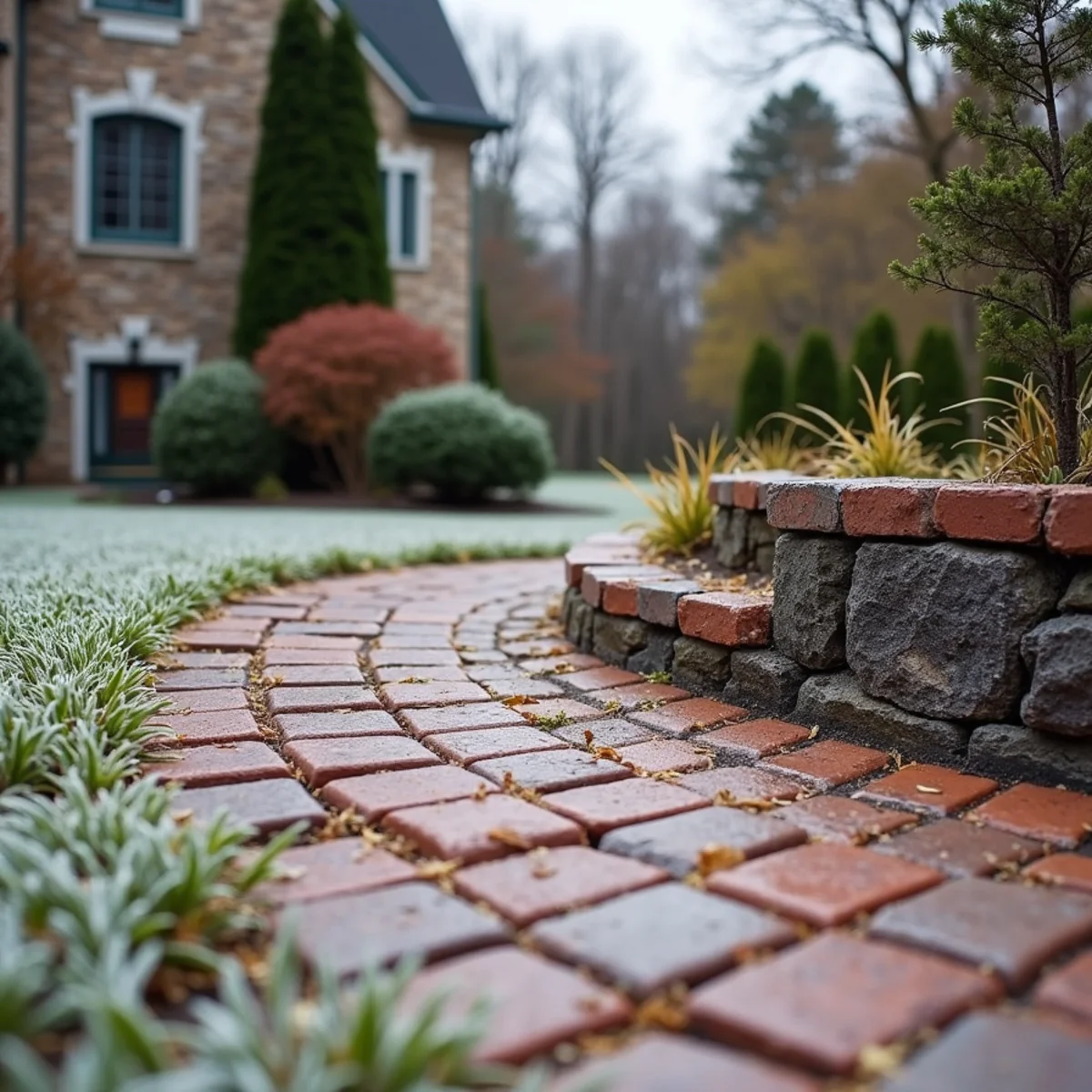
Central Kentucky does not get a steady deep freeze so much as a constant back-and-forth across the freezing line all winter. That freeze-thaw cycling is quietly one of the most destructive forces on a landscape, and it is the reason so many patios and walls that looked perfect in the fall come apart by spring.
How freeze-thaw heave works
When wet soil freezes, the water in it expands and pushes the ground upward — frost heave. When it thaws, the ground settles back down, but not always evenly. Repeat that cycle dozens of times over a winter and anything sitting on poorly drained soil gets lifted, tilted, and cracked. Our clay soil, which holds water readily, makes the effect worse.
Why drainage is the real defense
The damage requires water in the soil to happen. That is why a properly built patio or wall is really a drainage system in disguise: a free-draining aggregate base, gravel backfill behind walls, and correct pitch all keep water from saturating and freezing where it can do harm. A base that holds water is a base that heaves.
Building to ride the seasons
- Excavate to proper depth so the base sits below the worst of the freeze influence.
- Use free-draining, compacted aggregate — not soil or fine material that holds water.
- Behind walls, install gravel backfill and drain pipe to relieve pressure and moisture.
- Pitch surfaces to shed water rather than letting it pool and soak in.
- Lock paver joints with polymeric sand so they stay tight through the movement.
What to watch for each spring
Come spring, walk your hardscape and look for newly uneven pavers, joints that have opened, a wall course that has shifted, or cracks that were not there in fall. Catching heave damage early often means a smaller, cheaper correction. If the same spots heave every winter, the underlying base and drainage need attention — patching the surface will not stop it.
Field notes: designing hardscape to ride the seasons
Freeze-thaw is quietly the most destructive force on Central Kentucky hardscape, and it only works with an accomplice: water in the soil. That is why every durable patio or wall we build is really a drainage system in disguise. Free-draining base, gravel backfill behind walls, and correct pitch all exist to keep water from saturating and freezing where it can lift and crack what sits above.
The repairs we are called to make almost always trace back to a base that held water. Once you understand that, the fix stops being mysterious: you are not fighting the cold, you are keeping water out of the equation. A patio built to shed and drain rides dozens of freeze-thaw cycles a winter without complaint; one built on water-holding material comes apart by spring.
The Bottom Line
Freeze-thaw does not damage hardscape on its own — it needs trapped water to do the work. Build for drainage and correct pitch, and your patios and walls ride the Kentucky winter intact. Hernandez Landscaping builds freeze-resistant hardscape across Georgetown and Sadieville.
How Hernandez Landscaping Can Help
We put this into practice every day across Central Kentucky. Explore our retaining wall construction done right and brick and stone patios, or see how we serve Georgetown homeowners and the Sadieville area.
Call (323) 606-0255Frequently Asked Questions
It can be almost entirely designed out. Proper excavation depth, a free-draining compacted base, drainage behind walls, and correct pitch keep water from saturating and freezing where it does harm. The failures we repair nearly always trace to a base that trapped water.
Recurring seasonal movement is a warning, not normal wear. It usually points to water and inadequate drainage behind the wall. The lasting fix addresses the backfill and drainage rather than just resetting the face each spring.
It can be almost entirely designed out with proper depth, a free-draining base, and drainage. The failures we repair are nearly always traceable to a base that held water.
Recurring seasonal movement points to a drainage or base problem behind the wall. The lasting fix addresses the backfill and drainage, not just re-setting the face.
Written by the Hernandez Landscaping team
We’re a locally owned, insured landscaping company that has designed, built, and maintained Central Kentucky properties since 2010. This guide reflects hands-on experience with Georgetown’s Zone 6b climate, clay soil, and freeze-thaw winters — not generic advice.
Sources & standards
Our recommendations draw on University of Kentucky turf guidance, EPA WaterSense irrigation principles, and USDA hardiness & soil data.