Drive any back road in Fayette, Woodford, or Scott County and you will pass hand-stacked limestone fences that have stood for well over a century. That heritage is part of what makes the Bluegrass look like the Bluegrass, and it is a craft worth doing right when a slope on your property calls for a stone wall.
Why limestone, and why dry-stack
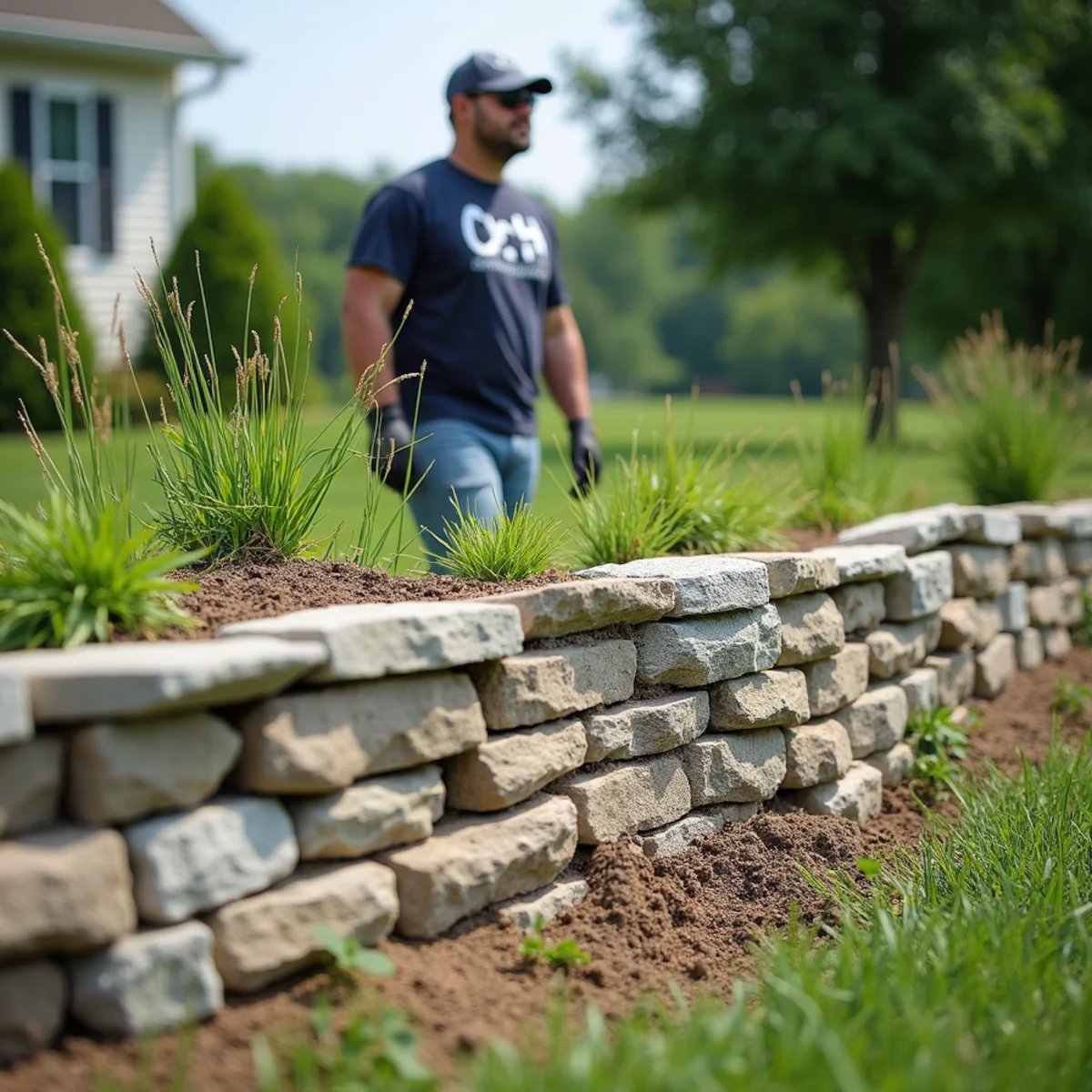
Central Kentucky sits on limestone bedrock, so the stone is native to the landscape — it belongs here in a way manufactured block never quite does. A dry-stack wall uses no mortar; the stones are fitted and their own weight and friction hold the wall together, which lets it flex slightly with the freeze-thaw movement that cracks rigid, mortared structures.
The base still decides everything
Even a traditional dry-stack wall lives or dies by what is beneath it. We excavate a level footing trench and set a compacted base so the wall cannot settle unevenly. For a retaining wall — one holding back a slope, as opposed to a freestanding fence — we also build in gravel backfill and drainage so water pressure never pushes the wall out.
The craft of the stack
- Larger, flatter stones set as the foundation course.
- Joints staggered so no seam runs straight up the wall.
- A slight batter — the wall leaning back into the slope — for stability.
- Tie-stones running deep into the wall to bind the face to the backfill.
- Capstones to shed water and finish the top cleanly.
When modern block is the better call
Dry-stack limestone is beautiful and durable, but it is not always the right structural choice — a tall wall holding a heavy load may call for engineered segmental block with geogrid reinforcement, sometimes faced with stone for the traditional look. We help you weigh heritage aesthetics against the structural demands of your specific slope, and often the best answer blends both.
Field notes: honoring the craft without ignoring the engineering
There is real romance to a hand-stacked limestone wall, and in the Bluegrass it belongs to the landscape in a way manufactured block never quite will. But romance does not hold back a saturated hillside. The old fences that have stood for a century are mostly freestanding field walls carrying their own weight — not retaining walls holding tons of wet soil. Those are different jobs with different rules.
When a slope carries real load, we are honest with clients: the right answer may be engineered segmental block with geogrid reinforcement, faced with natural stone so it still reads as Bluegrass craft. You get the heritage look and the structural performance. Pretending a tall dry-stack wall can do a reinforced wall's job is how beautiful walls end up leaning in a few winters.
The Bottom Line
Dry-stack limestone is a craft worth preserving — and worth pairing with sound engineering when the slope demands it. Insist on drainage and an honest read of the load, and your wall will honor the Bluegrass for decades. Hernandez Landscaping builds stone and reinforced walls across Georgetown and Midway.
How Hernandez Landscaping Can Help
We put this into practice every day across Central Kentucky. Explore our retaining wall and stone construction and residential hardscape design, or see how we serve Georgetown properties and the horse farms around Midway.
Call (323) 606-0255Frequently Asked Questions
A low dry-stack wall can retain a modest grade with proper base and drainage, but a tall wall holding a heavy, saturated slope usually needs engineered reinforcement. We often blend the two — a reinforced structure faced with natural stone — so the wall performs and still looks the part.
Typically yes, in both material and labor, because stone is set by hand and sourced as natural material. The payoff is a heritage appearance and a wall that can last generations. We help you weigh that against budget and the structural demands of your specific slope.
A retaining wall holding a slope does — gravel backfill and drainage keep water pressure from pushing it out. A low freestanding fence has different requirements.
Natural stone typically costs more in material and labor than standard block, but it delivers a heritage look and can last generations. We help you weigh the trade-offs for your site.
Written by the Hernandez Landscaping team
We’re a locally owned, insured landscaping company that has designed, built, and maintained Central Kentucky properties since 2010. This guide reflects hands-on experience with Georgetown’s Zone 6b climate, clay soil, and freeze-thaw winters — not generic advice.
Sources & standards
Our recommendations draw on University of Kentucky turf guidance, EPA WaterSense irrigation principles, and USDA hardiness & soil data.