If part of your yard is perpetually soggy, grows moss instead of grass, or squelches underfoot days after a rain, the problem is drainage, not the lawn. In Central Kentucky, clay soil that infiltrates water slowly is usually the culprit. The good news is that it is fixable — with the right system, chosen for your specific situation.
Match the tool to the water
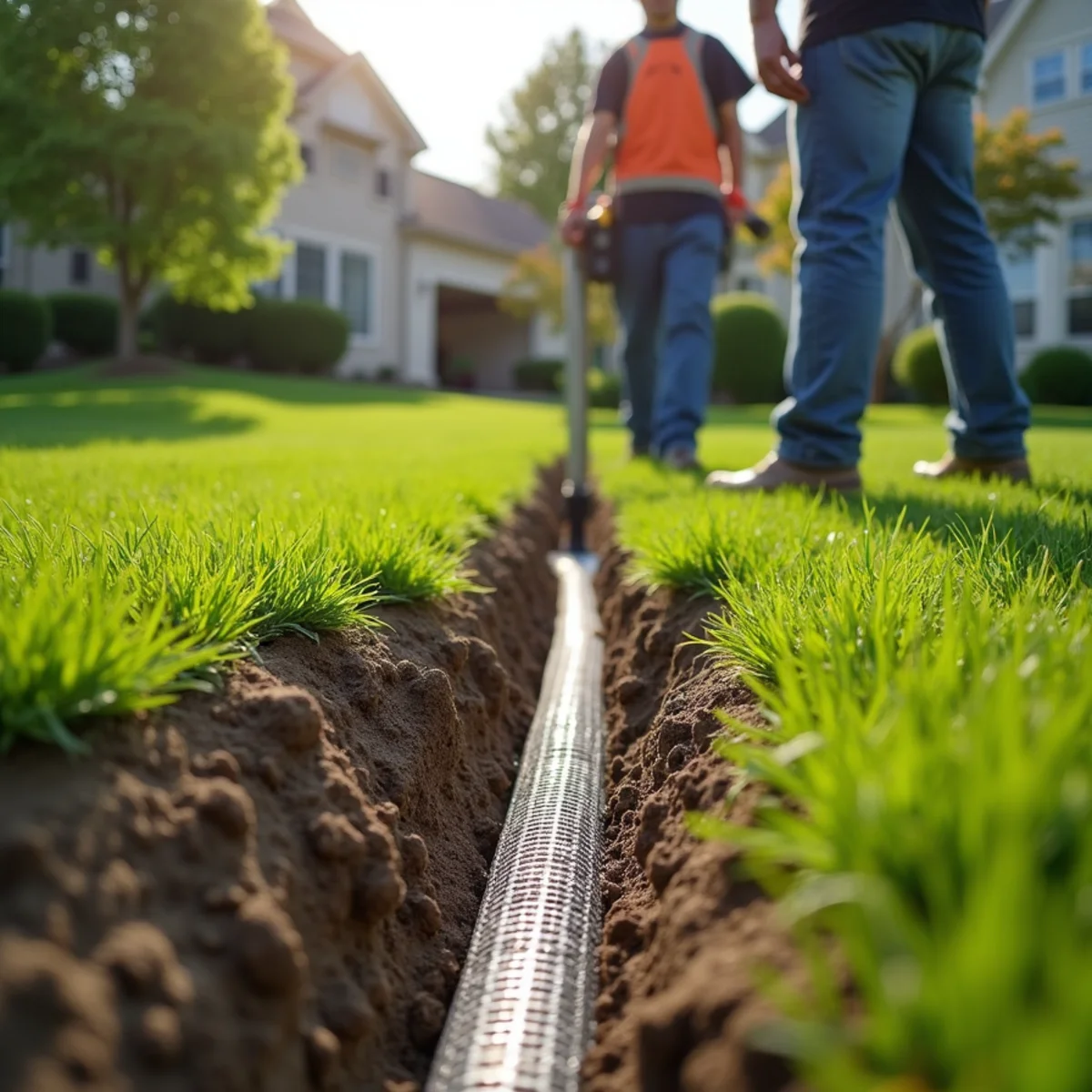
There is no single fix for a wet yard. A French drain — a gravel-filled trench with perforated pipe — excels at collecting subsurface water and water that saturates an area. A catch basin captures surface water pooling at a low spot. Buried downspout extensions move roof water away from the foundation. And sometimes simple regrading solves it. The right answer depends on where the water is and where it can go.
Start with the downspouts
It is surprising how often a soggy yard traces back to roof water. A single downspout dumping thousands of gallons at the corner of the house each storm overwhelms the surrounding soil. Burying those downspouts and piping the water well out into the yard — or to a proper outlet — is frequently the cheapest, highest-impact drainage improvement a home can make.
What makes a French drain last
- Correct, continuous slope so water always moves toward the outlet.
- Quality washed stone and filter fabric to keep fine clay from clogging the pipe.
- Perforated pipe sized to the volume of water collected.
- A confirmed, stable outlet — daylight, a basin, or an approved drainage area.
- Clean-outs so the system can be maintained over the years.
Why diagnosis comes first
Installing a French drain where the problem is actually surface grading, or vice versa, wastes money and can make things worse. We trace the water’s source, check the grade and soil, and confirm the outlet before recommending anything. Photographing your yard during a storm helps enormously — it shows the real flow path.
Field notes: matching the tool to the water
The soggy-lawn calls we get usually resolve into a simple hierarchy. Start with the roof: if downspouts are dumping at the foundation, bury and extend them first, because that is the cheapest high-impact fix and it removes an enormous volume of water. Next look at grade: sometimes reshaping the surface so it sheds is all that is needed. Only then does a French drain enter the picture, for water that genuinely saturates an area or moves underground.
The failures we are called to repair almost always skipped a detail — no filter fabric, so fine clay clogged the pipe; wrong slope, so water sat; or no clean-out, so the system could never be maintained. A French drain is not complicated, but it is unforgiving of shortcuts. Built right, with washed stone, fabric, correct fall, and a confirmed outlet, it works for decades.
The Bottom Line
A saturated lawn is a drainage puzzle, and the answer is rarely one-size-fits-all. Start with downspouts, check the grade, and reserve the French drain for water that truly needs it — then build it without shortcuts. Hernandez Landscaping diagnoses and solves drainage across Georgetown and Nicholasville.
How Hernandez Landscaping Can Help
We put this into practice every day across Central Kentucky. Explore our French drain and downspout solutions and sod installation and turf replacement, or see how we serve yards across Georgetown and the subdivisions of Nicholasville.
Call (323) 606-0255Frequently Asked Questions
Built correctly — proper slope, washed stone, filter fabric, and accessible clean-outs — a French drain can function for decades with minimal attention. The ones that fail early almost always skipped the fabric, got the slope wrong, or drained to a clogged outlet.
Occasionally, if the low spot is minor and has somewhere to drain. More often, filling a wet area without addressing where the water comes from just moves the problem. We trace the source first so the fix actually holds.
Built correctly — proper slope, washed stone, filter fabric, and clean-outs — a French drain can function for decades. The failures we see come from skipped fabric, wrong slope, or a clogged outlet.
Drainage requires trenching, but we keep it tight, restore turf over the trench, and leave the yard looking whole. Most of the system is buried and invisible when finished.
Written by the Hernandez Landscaping team
We’re a locally owned, insured landscaping company that has designed, built, and maintained Central Kentucky properties since 2010. This guide reflects hands-on experience with Georgetown’s Zone 6b climate, clay soil, and freeze-thaw winters — not generic advice.
Sources & standards
Our recommendations draw on University of Kentucky turf guidance, EPA WaterSense irrigation principles, and USDA hardiness & soil data.