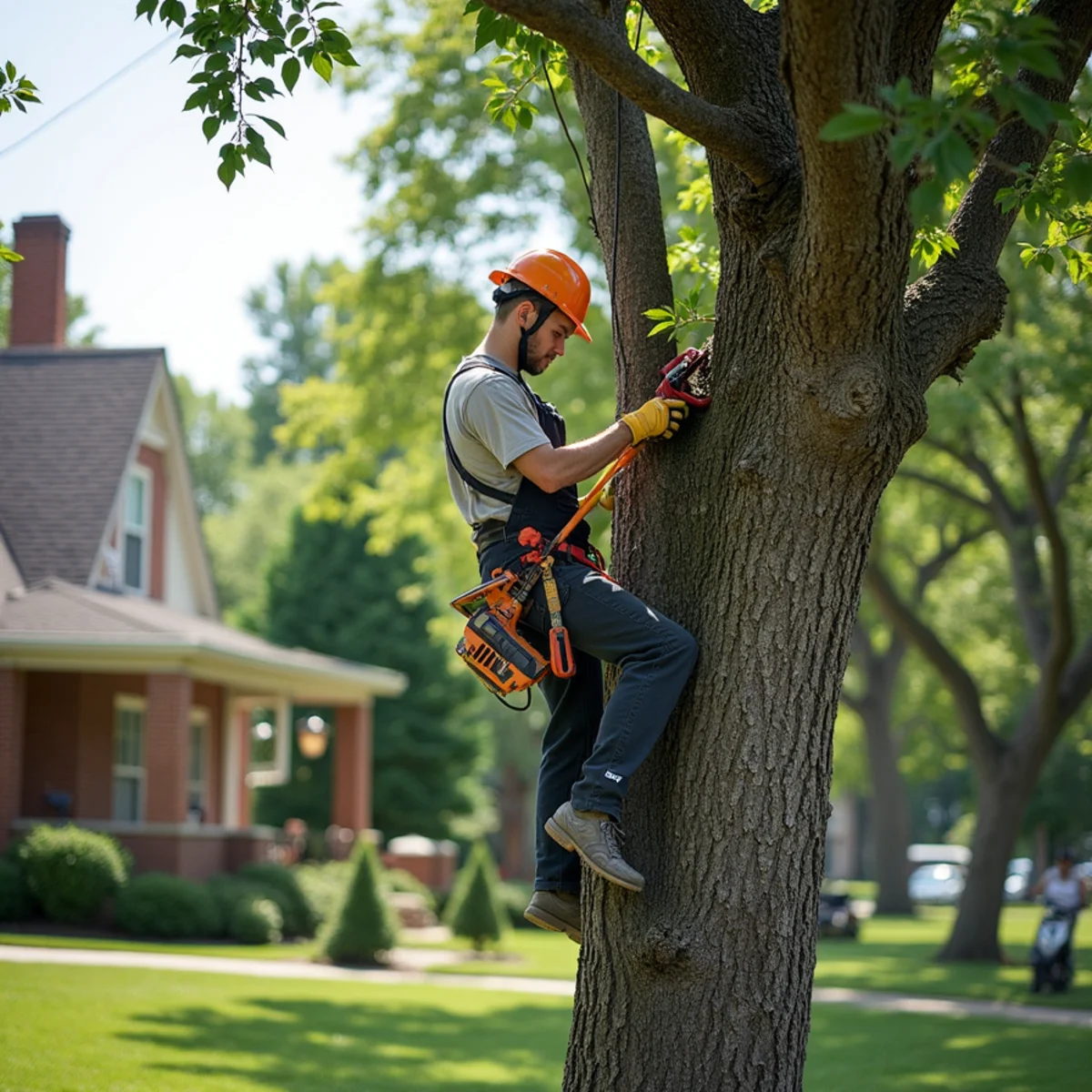
Georgetown’s historic district and mature neighborhoods are full of large old trees growing close to homes, sidewalks, and utility lines. Keeping those trees healthy and safe often means pruning — but not all pruning is equal. Knowing which cuts you can make and which ones call for a professional protects you, your home, and the tree.
What homeowners can safely handle
Small, low, dead twigs and light shaping you can reach with both feet on the ground are within reach for most homeowners with proper tools. If you can make the cut without a ladder, without a chainsaw overhead, and well clear of any line, it is usually a reasonable DIY task.
When to call a professional
- Any branch near a power line — clearance work near energized lines is hazardous and often the utility’s or a qualified crew’s responsibility.
- Large limbs over a roof, especially on a historic home where a dropped limb causes costly, hard-to-replace damage.
- Anything requiring a chainsaw above shoulder height or a ladder into the canopy.
- Structural pruning of big oaks and maples, where a wrong cut invites decay or destabilizes the tree.
- Storm-damaged, cracked, or hung-up limbs under tension.
Historic homes raise the stakes
Around Georgetown’s Federal and Victorian-era homes, the cost of a mistake is higher. Slate and standing-seam roofs, original woodwork, and mature landscape plantings are expensive and difficult to replace. Professional rigging lets us lower limbs in controlled sections rather than dropping them, protecting both the structure and the beds below.
Good pruning is about the tree, too
Beyond safety, proper pruning keeps a tree healthy: removing deadwood, correcting weak or crossing branches, and thinning the canopy to reduce wind and ice load. Bad cuts — topping, flush cuts, or over-thinning — stress the tree and create the very hazards you were trying to prevent. Late winter dormancy is generally the best time for structural pruning.
Field notes: where DIY pruning goes wrong near old homes
Around Georgetown's historic district, the cost of a dropped limb is not just a dented gutter — it can be a slate roof, original woodwork, or a mature planting that took decades to establish. That changes the calculus entirely. Work that might be fine over an open lawn becomes a rigging job over a historic home, where every piece is lowered under control rather than dropped and hoped.
The other line people cross is the utility line. Homeowners routinely underestimate how far electricity can arc, and how a branch that looks clear from the ground is not. Clearance work near energized lines belongs with the utility or a qualified crew, full stop. When we assess a tree near lines, part of the job is telling you honestly which portions we handle and which the utility must.
The Bottom Line
Near historic homes and power lines, pruning is a safety and stewardship decision, not a weekend task. Know which cuts are yours and which belong to a crew, and time structural work for dormancy. Hernandez Landscaping prunes and protects mature trees across Georgetown and Cynthiana.
How Hernandez Landscaping Can Help
We put this into practice every day across Central Kentucky. Explore our professional tree service and pruning and emergency limb removal, or see how we serve historic Georgetown homes and the Cynthiana area.
Call (323) 606-0255Frequently Asked Questions
For a homeowner, the safe answer is: not close at all. Branches near energized lines require trained crews and often utility coordination because electricity can arc across a gap. We assess the situation and handle the clearance-safe portions while directing the rest appropriately.
Late winter dormancy is ideal for most structural pruning — the branch structure is visible and the tree heals quickly come spring. Dead, cracked, or hazardous limbs, though, should be removed whenever they are found, in any season.
Work near energized lines must be handled safely and often in coordination with the utility. We assess the situation, advise you appropriately, and handle the clearance-safe portions of the job.
Late winter dormancy is ideal for most structural pruning — the structure is visible and the tree heals quickly in spring. Dead and hazardous limbs should be removed whenever found.
Written by the Hernandez Landscaping team
We’re a locally owned, insured landscaping company that has designed, built, and maintained Central Kentucky properties since 2010. This guide reflects hands-on experience with Georgetown’s Zone 6b climate, clay soil, and freeze-thaw winters — not generic advice.
Sources & standards
Our recommendations draw on University of Kentucky turf guidance, EPA WaterSense irrigation principles, and USDA hardiness & soil data.